Abstract: Dr Bharat Jhunjhunwala acquired his doctoral degree in economics from University of Florida at the age of 23. He returned to India and joined Indian Institute of Management, Bangalore as an Assistant Professor. He, at present lives in the lower Himalayas in Uttarakhand. In an eye opening conversation with the editor, G’nY, Dr Jhunjhunwala unravels the complexities of the dam-removal-phenomenon now underway in the US.
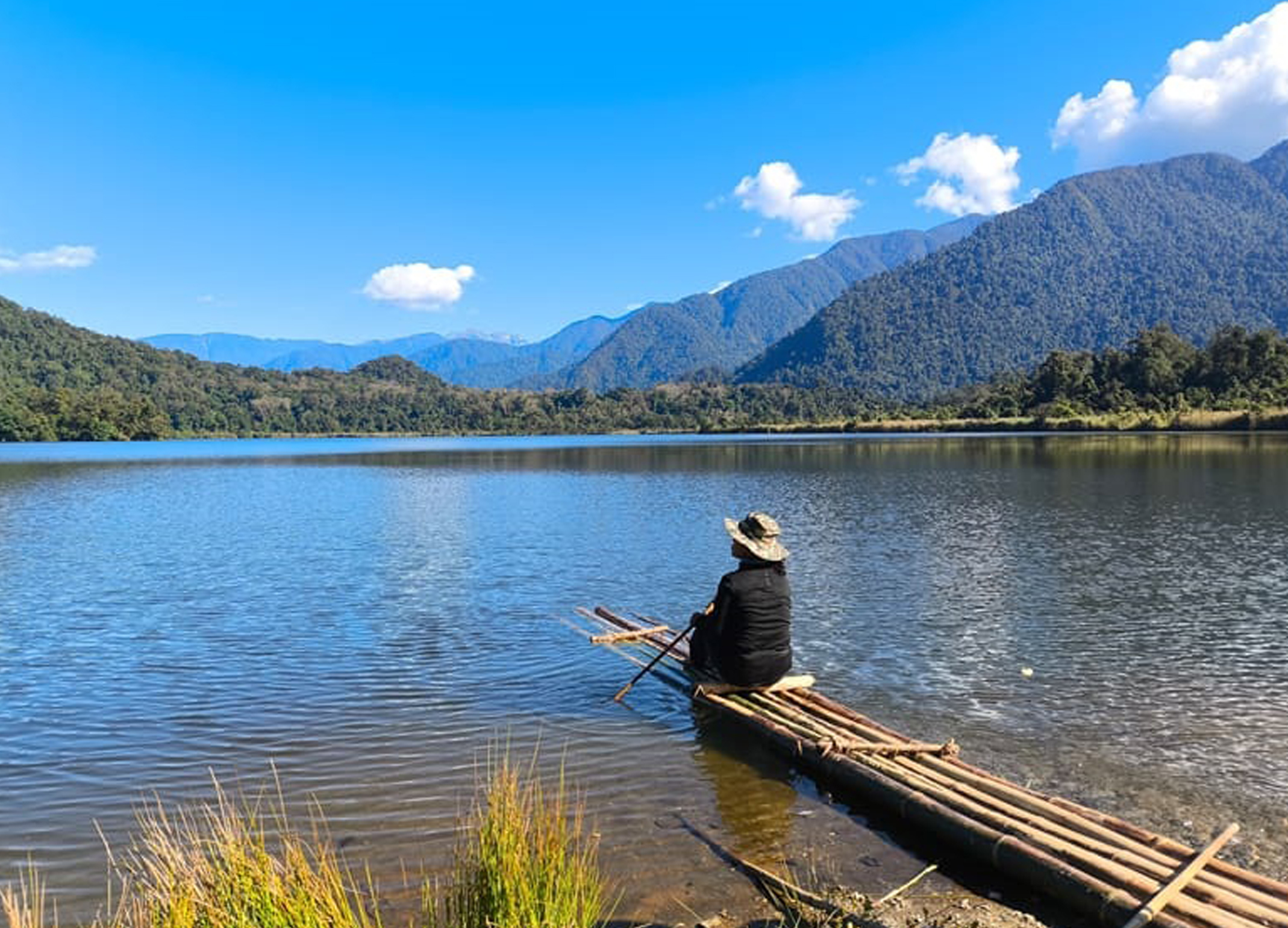
Glaw Lake was recently designated as Arunachal Pradesh’s First and India’s 101st Ramsar Site. It is located within the Kamlang Tiger Reserve and Wildlife Sanctuary. It hosts diverse flora and fauna sp...
Maritime chokepoints are vital points along shipping routes that facilitate the passage of substantial trade volumes. These chokepoints control the global essential supplies such as oil, gas, fertiliz...
What if India's pathway to net zero does not end at factories—but begins where terrestrial meets the coastal? As carbon emissions rise and climate risks intensify, the search for solutions has largely...
India is set to embark on a new chapter in its Polar exploration journey with the construction of Maitri II. The Indian government plans to establish a new research station near the existing Maitri ba...
An anabranch is a section of a river or stream that diverts from the main channel or stem of the watercourse and rejoins the main stem downstream. Local anabranches can be the result of small islands in the watercourse. In larger anabranches, the flow can diverge for a distance of several kilometres before rejoining the main channel.
The percentage of fish moving toward a dam’s turbine units that are diverted away by a fish guidance device, such as a submersible traveling screen.
Measure of the volume of water which a structure can pass or measure of the volume and flow of water within a watercourse.
A penstock is a sluice or gate or intake structure that controls water flow, or an enclosed pipe that delivers water to hydraulic turbines and sewerage systems. It is a term that has been inherited from the technology of wooden watermills.
The dam whereby the natural flow and elevation drop of a river are used to generate electricity. No large reservoirs are built for water storage in such projects.
Having a total catchment area of 61642 Sq.Km, Indira Sagar Project is the mother project for the downstream projects on Narmada Basin with largest reservoir in India, having 12.22 bm3 storage capacity.
An opening at a low level from a reservoir generally used for emptying or for scouring sediments and sometimes for irrigation releases.
A spillway is a structure used to provide for the controlled release of flows from a dam or levee into a downstream area. Spillways release floods so that the water does not overtop and damage or destroy the dam.
The tail race tunnel or channel are provided to direct the used water coming out of draft tube back to the river. Tail race is designed in such a way that water hammer is minimized when water leaves the draft tube.
A basin constructed to dissipate the energy of fast-flowing water from an outlet. Also known as stilling box.
In hydrologic terms, a graph showing the relation between the surface area of the water in a reservoir, the corresponding volume, and elevation, is the area-capacity curve.
Surge tank signifies a reservoir which mitigates pressure variations due to rapid changes in velocity of water. It absorbs the water hammer effects due to rapid start or closure of the turbine.